


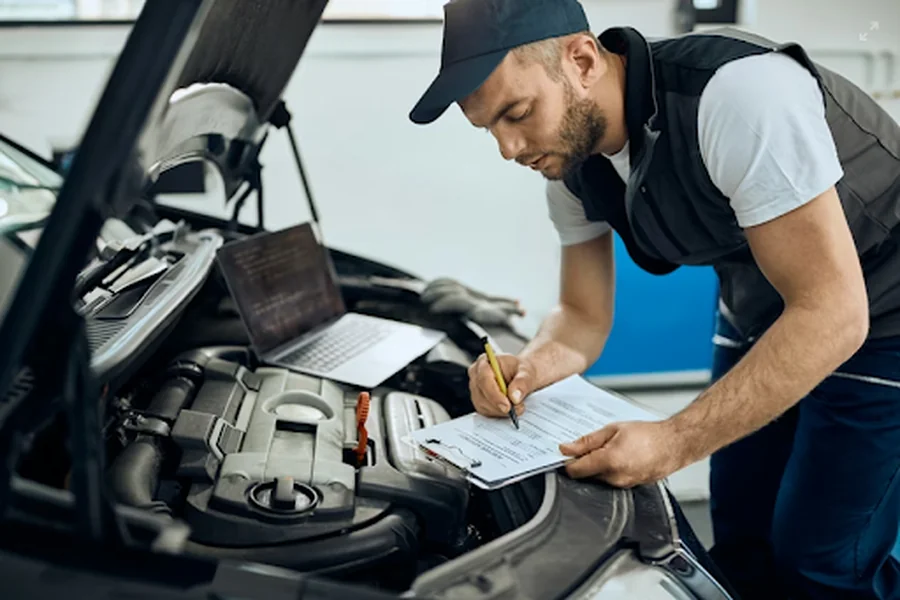
Most drivers only think about an inspection when something feels wrong. A strange noise, a warning light, a vibration at higher speeds, or that small doubt before a long drive. But a full vehicle inspection is not just about finding what is already broken. It is about understanding the overall health of your car before small issues turn into expensive ones.
A good inspection follows a process. Technicians are checking the vehicle system by system, looking for wear, leaks, loose parts, weak components, and anything that could affect safety or performance.
Step 1: The Initial Conversation
Before the car even goes on the lift, the inspection usually starts with a few basic questions. Have you noticed any noises? Is the steering pulling? Does the brake pedal feel different? Has a dashboard light appeared recently?
This part matters because the driver often notices early symptoms before a machine confirms them. A good technician will use that information to know where to look more closely.
Step 2: Exterior and Safety Checks
The inspection often begins with what can be seen from the outside. Lights, indicators, brake lights, windshield wipers, mirrors, tires, and visible body concerns are checked first. These may sound simple, but they affect everyday safety. Tires get special attention. The technician checks tread depth, air pressure, uneven wear, cracks, bulges, and signs of alignment problems.
Step 3: Under the Hood Inspection
Next comes the engine bay. The technician checks engine oil, coolant, brake fluid, transmission fluid where accessible, power steering fluid, and washer fluid. The condition of these fluids matters as much as the level. Dirty oil, low coolant, or contaminated brake fluid can say a lot about how the vehicle has been running.
Belts and hoses are also inspected for cracks, softness, leaks, or wear. In Cayman’s heat, rubber parts can age faster, so this step should not be rushed.
Step 4: Battery, Charging, and Electrical Systems
A weak battery can leave you stranded without much warning. During a full inspection, the battery terminals, cables, hold-down bracket, and charging performance are checked. The technician may also test the alternator and starting system, especially if the vehicle has had slow starts or electrical issues.
This is where a professional automotive center in Cayman that drivers trust can make a real difference, because modern vehicles rely heavily on sensors, modules, and electrical communication.
Step 5: Brakes, Suspension, and Steering
Once the vehicle is lifted, the technician can inspect the parts that are harder to see from the ground. Brakes are checked for pad thickness, rotor condition, fluid concerns, and visible leaks. Steering and suspension components are checked for looseness, worn bushings, damaged shocks, ball joint wear, and other signs of stress.
Step 6: Undercarriage and Drivetrain Review
The underside of the vehicle can reveal leaks, corrosion, damaged covers, exhaust issues, loose parts, or drivetrain wear. CV joints, axles, joints, mounts, and related components may be checked depending on the vehicle type.
Step 7: Diagnostic Scan
If a warning light is on, or if the technician wants a deeper system reading, a diagnostic scan may be performed. This helps find stored fault codes related to engine performance, emissions, sensors, ABS, transmission, and other electronic systems. It is one of the reasons regular car servicing in Cayman drivers schedule can prevent confusion later.
Step 8: Final Report and Recommendations
At the end, the technician should explain what was checked, what looks fine, what needs attention now, and what can be monitored. This is where the inspection becomes useful for the driver.
Not every finding means urgent work. Some issues are safety-related. Some are maintenance-related. Some can be planned for later. A reliable car repair Cayman provider should make that difference clear, so you are not left guessing.
